



How to Select High-Quality Carbon Block Filters: Core Standards for Your Water Purifier Sourcing
When sourcing water purifiers, many importers and brand owners focus heavily on appearance, TDS displays or water flow rate. Yet they often overlook one core component that shapes purification performance: the carbon block filter. Whether a system can remove chlorine, odors, organic compounds and certain persistent contaminants like PFAS largely depends on the quality of this single part.
A qualified carbon block is far more than compressed activated carbon powder. Poor raw materials or flawed manufacturing will weaken filtration efficiency, trigger carbon shedding, shorten service life and even cause secondary water contamination. Below, we break down practical evaluation criteria and industry standards for high-performance carbon block filters from a B2B purchasing perspective.
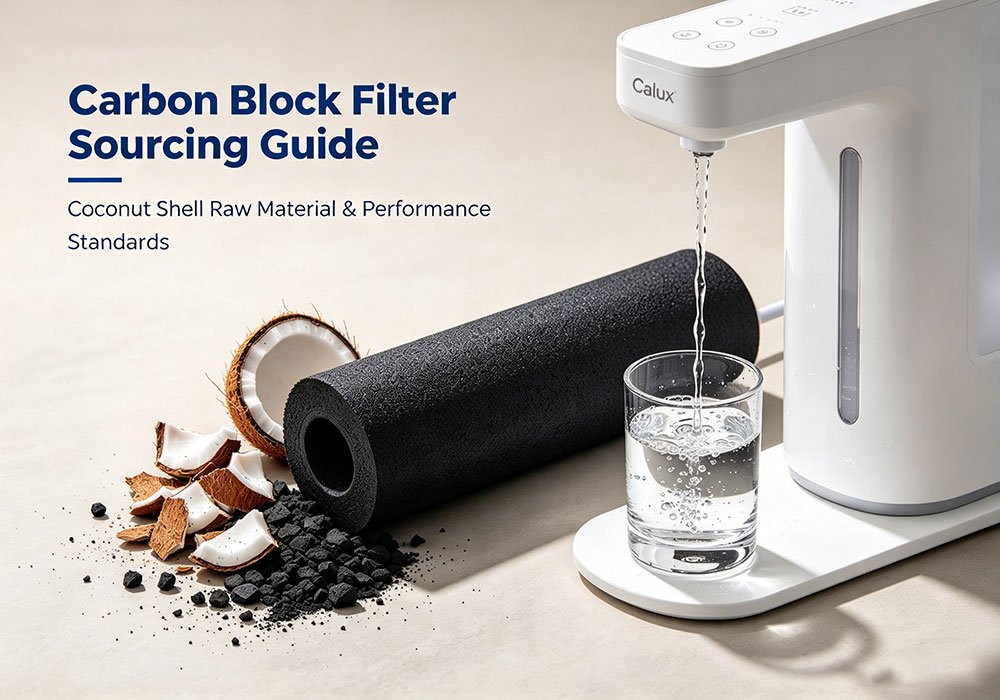
Calux-RO-water-purifiers
Start With Raw Materials: Carbon Source Directly Determines Adsorption Potential
Raw material selection forms the first benchmark for filter quality. Three common activated carbon types exist on the market: coconut shell carbon, coal-based carbon, and other fruit shell carbon.
Coconut shell activated carbon stands as the preferred option for premium carbon blocks. It features a well-developed pore structure with abundant mesopores, delivering strong adsorption for chlorine, volatile organic compounds, bad odors, and some PFAS precursors. Coal-based carbon carries a lower price point and higher mechanical hardness, yet it contains more ash and struggles with odor control, so it mainly applies to low-cost entry-level water treatment units.
Trusted high-grade carbon blocks adopt high-iodine-value coconut shell carbon that goes through acid washing. This process cuts ash content and reduces the baseline heavy metal level inside the carbon. Cheap, unwashed carbon feedstock may leach impurities and heavy metals into drinking water after long-term water contact, creating clear safety risks for end users.
Iodine Value & Methylene Blue Value: Core Metrics for Adsorption Capacity
Adsorption capacity defines the core function of any carbon block filter. The industry relies on two measurable indicators to quantify this capability.
The iodine adsorption value reflects the volume of micropores and signals how well the carbon traps small-molecule pollutants. Reliable carbon blocks for drinking water usually reach an iodine value of 1000 mg/g or higher. Filters with low iodine values share the same outer size, yet they saturate quickly and stop working after a short service cycle.
The methylene blue adsorption value correlates to mesopore quantity. It controls the removal of large organic molecules, color and unpleasant tastes. A higher methylene blue rating means better performance against discoloration, odors and disinfection byproducts.
One critical note: raw carbon test results do not equal finished carbon block performance. Binders used during compression will partially block pores, so the final carbon block will show slightly lower adsorption figures than loose carbon powder. Responsible suppliers provide test reports for the finished carbon block instead of only supplying raw carbon data.
Carbon Ratio & Binder Material: Balance Performance and Avoid Secondary Pollution
Carbon blocks form when activated carbon powder mixes with food-grade binders under high-pressure extrusion. Two factors deserve close review here: the percentage of activated carbon and binder composition.
Premium carbon blocks maintain a high carbon loading rate, while binders only serve to hold the shape. Low-cost products add excessive binder to simplify production and cut costs. Excess binder clogs pores and drastically destroys adsorption ability.
Furthermore, all binders must meet food-contact safety standards. Low-grade adhesive materials may release organic substances under warm water, leaving a plastic aftertaste in treated water and bringing frequent customer complaints. Qualified suppliers can provide supporting documents such as food contact certificates, FDA compliance statements or NSF certifications.
Mechanical Strength & Carbon Shedding Rate: Reduce After-Sales Headaches
A solid carbon block needs enough structural strength to stay intact under fluctuating water pressure.
Carbon shedding rate is a top pain point for B2B purchasers. Substandard filters release fine carbon powder and turn outlet water black. This powder travels downstream and clogs RO membranes prematurely, raising replacement costs and warranty claims significantly. Well-cured premium carbon blocks barely release carbon dust after flushing and keep output water clear.
You can run a simple validation test with suppliers: run water continuously at rated pressure, collect outflow samples, and measure turbidity to quantify carbon shedding.
Pore Uniformity, Flow Rate and Pressure Drop
A carbon block also works as a depth filter, with common precision ratings of 5 μm and 10 μm.
High-quality blocks have evenly distributed internal pores. They trap fine suspended solids without creating excessive flow resistance. Uneven internal structure leads to localized fast clogging, sharp flow decay and unstable operation of downstream RO systems.
During sourcing, confirm pressure drop data under rated flow. For the same filtration rating, a lower pressure drop indicates a better, more balanced internal structure.
Compliance Certifications: Region-Specific Standards for Export Markets
Certification requirements vary by target market, and these documents build trust with your end customers.
– For North America: NSF/ANSI 42 for chlorine and aesthetic reduction; NSF/ANSI 53 for organics and certain heavy metals. If you market PFAS removal, request dedicated third-party PFAS test reports.
– For the EU market: WRAS and ACS approvals for water contact materials.
– For domestic China sales: GB/T 17219 sanitary safety standards for drinking water distribution equipment.
An important reminder: standard carbon blocks have limited PFAS removal efficiency. Only specially modified activated carbon blocks, backed by independent PFAS lab test data, can legitimately claim PFAS reduction. Generic carbon cannot reliably capture these persistent chemicals.
Quick Practical Checks You Can Perform During Purchasing
1. Visual inspection: The surface should be compact and consistent, without cracks, loose gaps or irregular light-colored spots. The color should be deep, uniform black.
2. Flush test: Minor black water at first startup comes from loose surface carbon and is normal if it clears quickly. Continuous black outflow means excessive shedding and fails quality requirements.
3. Document review: Request finished product test reports to verify iodine value, methylene blue value, ash content and heavy metal leaching data.
4. Match to local water conditions: Domestic residential use, commercial applications and regions with PFAS contamination require customized carbon formulations. One single carbon block does not fit every water source.
Final Thoughts
Small as it looks, the carbon block filter acts as a vital link in the whole purification chain. Pre-carbon blocks protect expensive RO membranes from fouling, while post-carbon blocks polish taste and remove odors generated inside pipelines.
For brand owners and importers, pricing alone should never guide carbon block purchases. Raw material formulation, adsorption indicators, shedding performance, and valid certification reports together separate reliable filters from inferior alternatives. Sourcing consistent, high-quality carbon blocks helps you deliver stable purification results and cut your overall after-sales burden.
FAQ
Q1: What is the difference between carbon block filters and granular activated carbon (GAC) filters?
A: Granular carbon uses loose carbon grains, which allow water to bypass the carbon bed easily through channeling. Carbon blocks are one-piece compressed structures. Water must pass fully through the carbon medium, delivering longer contact time and more stable odor and organic removal.
Q2: Can carbon block filters remove PFAS from drinking water?
A: Regular coconut shell carbon blocks offer limited PFAS reduction. Only specially modified carbon blocks with verified third-party PFAS test results are suitable for PFAS treatment.
Q3: How often should users replace carbon block filters?
A: The typical service cycle for household use ranges from 6 to 12 months, depending on local water quality and daily water consumption. Replace filters sooner in heavily contaminated areas. Once saturated, carbon blocks may release captured contaminants back into the water.




 Deutschland
 United Kingdom